
Guernica di Picasso
Guernica — nan
À propos
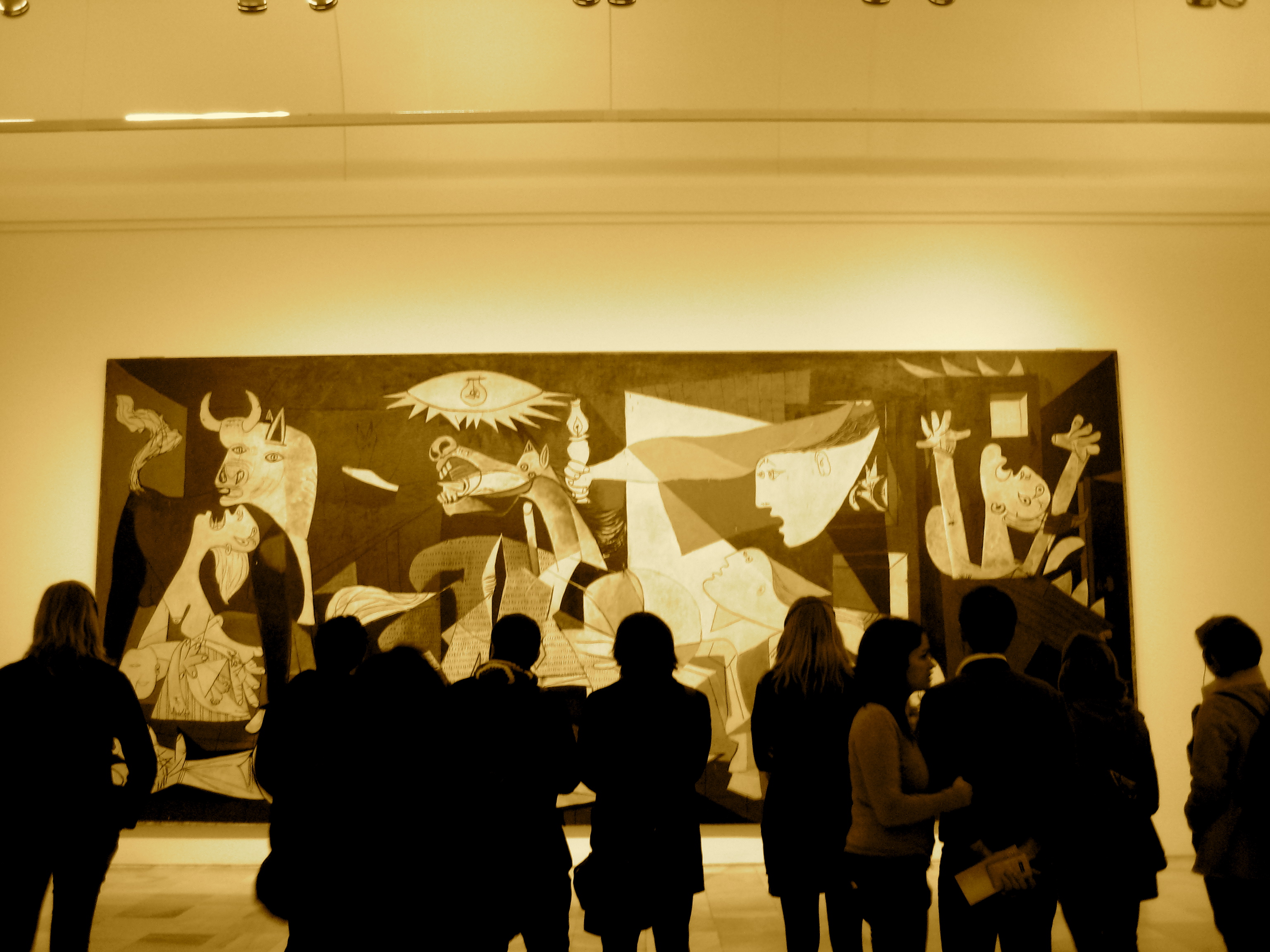
Guernica, a monumental black, white, and grey oil painting by Pablo Picasso, stands as one of the most powerful anti-war symbols in history. Created in 1937, it immediately became an iconic representation of human suffering and the brutality of conflict. Its creation was a direct response to the bombing of a Basque Country town during the Spanish Civil War. Commissioned by the Spanish Republican government for the Spanish Pavilion at the Paris International Exposition, Picasso aimed to capture the widespread anguish and chaos inflicted upon innocent civilians. The painting's stark monochromatic palette intensifies the emotional impact, emphasizing the tragedy and lack of hope. Measuring approximately 3.5 meters tall and 7.8 meters wide, Guernica is a massive canvas filled with fragmented figures of humans and animals. Picasso employs a Cubist style, breaking down forms and presenting multiple perspectives simultaneously, which adds to the sense of disorientation and trauma. Key figures include a screaming woman holding a dead child, a wounded horse, and a bull, each symbolizing different aspects of suffering and resilience. The absence of color amplifies the painting's somber mood, forcing viewers to confront the stark reality of war. A single light bulb, resembling an eye, glares down upon the scene, suggesting both divine judgment and the harsh glare of modern warfare. Culturally, Guernica transcends its immediate historical context to serve as a universal symbol of peace and a condemnation of violence. It has been displayed in numerous countries, becoming a focal point for anti-war protests and a reminder of the devastating consequences of conflict. Its powerful imagery continues to resonate with audiences worldwide, prompting reflection on the human cost of war and the importance of seeking peaceful resolutions. Interesting tidbits: Picasso refused to allow Guernica to be displayed in Spain until democracy was restored. The painting was initially housed at the Museum of Modern Art in New York before finally arriving in Spain in 1981. The imagery in Guernica has been interpreted in countless ways, with art historians and critics offering diverse perspectives on the symbolism of each figure and element. Picasso never publicly offered a definitive explanation of the painting's meaning, leaving it open to individual interpretation. When visiting, be prepared for a deeply moving experience. The sheer scale and emotional intensity of Guernica can be overwhelming. Allow ample time to contemplate the painting and its historical context. Photography is typically permitted, but flash photography is usually prohibited to protect the artwork. Consider visiting during off-peak hours to avoid crowds and have a more intimate viewing experience. The museum housing Guernica typically has extended hours on certain days, so check the schedule in advance. Tickets can be purchased online or at the museum, but purchasing online is recommended to avoid potential queues. Expect to spend at least an hour or two fully appreciating the artwork and its surrounding exhibits.
Practical information
- Type
- Tourisme
- Opening hours
- Mon–Sun: 09:00–18:00
- Built / founded
- 1937
- Artist
- Pablo Picasso
Rejoignez la communauté NOMADS
J’aime, commentaires, favoris et contacts locaux — tout dans l’app.